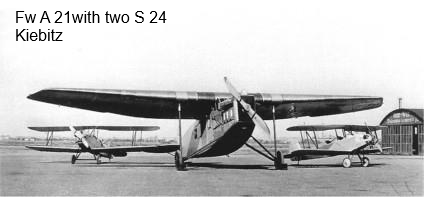
In 1929, an example, developed from the A 17, was built with a BMW VI engine and fitted out for aerial photography and survey work and designated A 21. The cabin was equipped with a darkroom
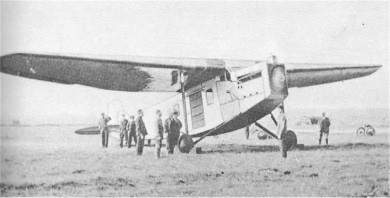
Verwendung: Lichtbild- und Vermessungszwecke.
Tragdeck durchgehend, Freitragend, auf Rumpfoberseite aufgesetzt. Flügeldicke und -tiefe nach den Enden zu abnehmend. Ein verdrehungsfester Kastenholm, Sperrholzrippen, Sperrholzbeplankung.
Rumpf rechteckig, mit gradlinig verlaufender Oberseite. Geschweißtes Stahlrohrfachwerk mit Stoffbespannung. Der Kabinenfußboden ist in einer Breite von 0,8 m und in einer Tiefe von fast 3 m offen ausgeführt. Die Öffnung läßt sich durch sieben Fußbodenteile in beliebiger Größe abdecken und durch besondere Jalousie vorübergehend schließen, um beim Start oder Landen die Lichtbildgeräte vor etwaiger Beschmutzung zu schützen. Beide Seitenwände der Kabine besitzen für Schrägaufnahmen in nahezu 2 m Breite, einschließlich der als Schiebetür ausgebildeten Einsteigöffnung, durch Jalousien verschlossene Öffnungen. Hinter der Kabine befindet sich eine Dunkelkammer mit einem Trocken- und einem Naßarbeitstisch, einem Sitz für die Lichtbildner, Fenster mit verschiebbaren Farbfiltern, Flaschen- und Geräteschrank. Führerraum unter Tragdeckvorderkante, von Kabine durch Tür getrennt.
Triebwerk: wassergekühlter Motor in Rumpfspitze.
Fahrgestell: Achslager durch V-Streben an Rumpfunterkanten angelenkt, durch senkrechte Federstrebe nach Tragdeck abgestützt.
| Type |
Special aircraft for aerial pfotography |
| Engine |
1 BMW VI u |
| Dimensions |
Length 13.0 m,height 4.00 m, span 20.0 m, wing area 62,5 m2 |
| Weights |
Empty 2700 kg, flying weight 3800 kg, wing loading 61 kg/m2 |
| Performance |
Max. speed 200 km/h, service ceiling 7000 m, range 700 km, landing speed 85 km/h |
| Type |
Werk.Nr |
Registration |
History |
|
54 |
D-1737 |
In Oct. 1929 to DVL e. V., Adlershof |
|
56 |
D-1738 |
|