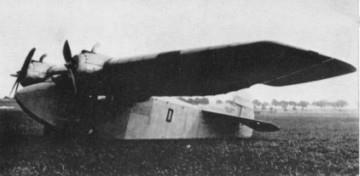
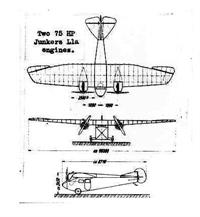
Focke-Wulf Schul- und Verkehrsflugzeug GL 18c.
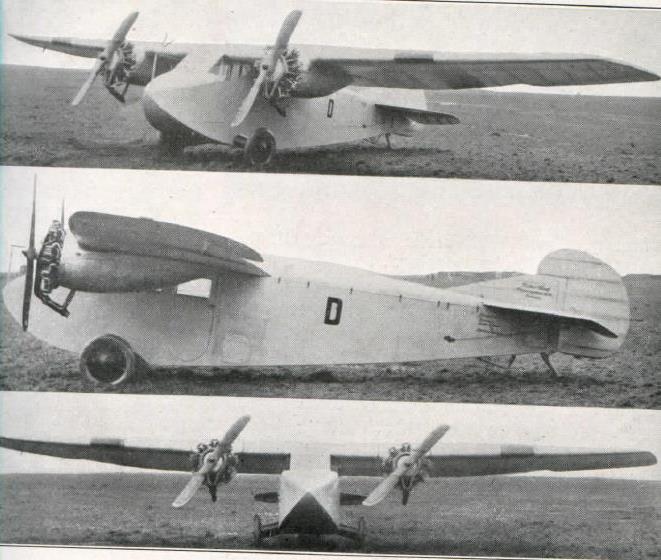
Vor einigen Tagen erfolgte bei der Deutschen Versuchsanstalt für Luftfahrt E. V., Adlershof, die Abnahme eines neuen Zweimotoren-Flugzeuges Typ GL 18c der Focke-Wulf Flugzeugbau AG., Bremen, Dieser Typ ist eine Weiterbildung des im vergangenen Jahre an die Deutsche Luft-Hansa A.-G. abgelieferten Musters (GL 18 und wurde, um noch höhere Leistungen zu erzielen, mit zwei in der Tragfläche zu beiden Seiten des Rumpfes eingebauten 108/125 PS Siemens-Motoren ausgerüstet. Diese Motoren, mit denen allein in Deutschland im Jahre 1926 über eine Million Flugkilometcr zurückgelegt worden sind, zeichnen sich bekanntlich durch besonders große Sparsamkeit und Zuverlässigkeit im Betriebe aus.
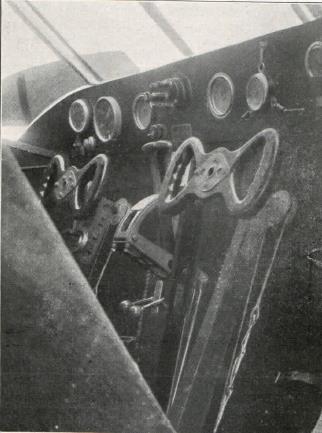
Der Rumpf des Flugzeuges ist gegenüber dem Typ GL 18 bedeutend breiter gehalten, so daß der Führerraum mit einem bequemen 2. Führersitz und Doppelsteuerung versehen werden konnte. Die Betätigung der Höhen- und Querruder erfolgt in bekannter Weise mittels geteiltem Handrad, während das Seiteuruder durch Pedal bewegt wird. Da die Maschine außer für Verkehrsflüge gleichzeitig auch als Schulflugzeug gedacht ist, wurde das wichtigste Steuer, das Höhen ruder, so eingerichtet, daß es bei etwaigen falschen Steuerbewegungen des Schülers durch den 1 Führer mit einem Griff von dem Steuer des Schülers getrennt werden kann. Sämtliche übrigen Teile des Flugzeuges zeigen die für Focke-Wulf charakteristische Bauausführung. Die Maschine kommt
besonders für junge Verkehrspiloten in Frage, um sich mit der Führung mehrmotoriger Flugzeuge vertraut zu machen.
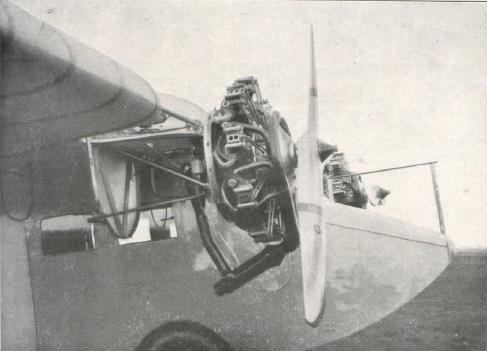
Interessant ist der Einbau der beiden Siemens-Motoren und die hierbei erzielte Anpassung an die stromlinienförmigen Motorgondeln, die durch die kurze Bauart des Motors mit den in einer Ebene liegenden sternförmig angeordneten Zylindern ermöglicht wird. Der Einbau besteht aus einem Stahlrohrgerüst mit vorgesetztem Motorspant aus Stahlblech. Das Stahlrohrgerüst ist mit seinen Wurzelpunkten direkt am Kastenholm des Flügels mit durchlaufenden langen Stahlbolzen verankert. Stahlrohre und Beseitige sind mittels konischer Bolzen verschraubt, Schweißung ist unterblieben. der ganze Aufbau des Motorträgers ist so, daß für die Kontrolle und für die evtl. Ueberholung von Magneten und Vergasern
eine außerordentlich bequeme Zugänglichkeit zu den genannten Teilen besteht. Wenn die untere Karosserieschale mit wenigen Handgriffen abgenommen ist, kann der Monteur auf der Erde stehend arbeiten, wobei Vergaser und Magnet in Augenhöhe vor ihm sitzen. Der Motorraum ist nach oben und nach rückwärts durch ein Feuerschott aus Stahlblech von jeglicher Flügelkonstruktion getrennt; über jedem Vergaser endigt eine Feuerlöschleitung des Handfeuerlöschers, welcher im Führersitz fest eingebaut ist und einfach und schnell gehandhabt werden kann. Der Motorträger ist so weit vorgebaut, daß bei einer Propellerbeschädigung keine Insassen und kein lebenswichtiger Teil der Maschine von abfliegenden Stücken getroffen werden können. Die Vergaser sind durch Schaulöcher in der Karosserie vom Führer aus sämtlich zu übersehen und bequem zu überwachen.
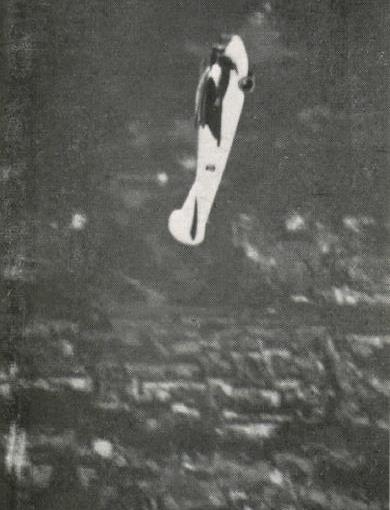
Bei den Priifungstliigen wurden außerordentlich gute Leistungen, insbesondere sehr gute Steigzeiten des Flugzeuges festgestellt. Mit der Maschine wurden sogar verschiedene Arten von Kunstflügen, wie Rollings und Loopings, ausgeführt, durch welche eine außerordentlich Große Wendigkeit und Sicherheit bewiesen wurde. Im Prüfbericht der Deutschen Versuchsanstalt für Luftfahrt E. V., Adlershof, iieißt es: Das Flugzeug läßt sich mit einem ausfallenden Motor mit geringen Kräften noch geradeaus fliegen.14 Diese Leistung ist um so beachtenswerter, als es heute nur wenige Flugzeuge gibt, die bei Ausfall eines Motors weiterfliegen können.
| Type |
GL 18 |
GL 18a |
GL 18c |
| Engine |
2 Junkers L1a |
2 Siemens Sh 11 |
2 Siemens Sh 12 |
| Dimensions |
Length 8.50 m, height 2.60 m, span 16.00 m, wing area 32.00 m2 |
Length 9.10 m, height 2.60 m, span 16.00 m, wing area 32.00 m2 |
Length 9.10 m, height 2.60 m, span 16.00 m, wing area 32.00 m2 , max. wing chord 2,6 m |
| Weights |
Empty 925 kg, flying weight 1450 kg |
|
Empty 1194 kg, payload 456 kg, flying weight 1650 kg |
| Performance |
Max. speed 135 km/h, cruising speed 125 km/h, landing speed 85 km/h, required runway for take off 115 m, for landing 85 m, climb to 1000 m 10 min., service ceiling 3400 m |
|
Max. speed 140 km/h, cruising speed 125 km/h, landing speed 85 km/h, required runway for take off 160 m, for landing 100 m, climb to 1000 m 5.8 min., to 3000 m 15 min., service ceiling 3500 m, range 500 km |
| Type |
Werk.Nr |
Registration |
History |
| GL 18 |
28 |
D-967 |
"Helgoland". First flight 9th of August 1926. To Junkers Luftverkehr AG, from 1926 to Lufthansa. 1929 to RLM, scrapped 1932 |
| GL 18a |
30 |
D-1066 |
Used by the DVS |
| GL 18c |
31 |
D-1097 |
Built 1928. To DVS, Berlin-Staaken. Stored March 1932 |










