The Focke-Wulf S 2 was a trainer aircraft built in Germany in the late 1920s. It was a conventional parasol-wing monoplane with fixed tailskid undercarriage. The pilot and instructor sat side by side in an open cockpit. Only a single example was built.
Focke-Wulf Schul- und Sportflugzeug S 2.
Als Weiterentwicklung ihres bewährten Musters S 1 hat die Focke-Wulf Flugzeugbau A.-G., Bremen, kürzlich ein neues Schul- und Sportflugzeug unter der Bezeichnung S2 herausgebracht.
Die Maschine wurde diesmal als ausgesprochener Schirmhochdecker gebaut, wodurch für die Insassen ganz ausgezeichnete Sichtverhältnisse besonders bei der Landung geschaffen wurden. Beibehalten wurde die Anordnung der Sitze für Schüler und Lehrer neben-einander. Diese Sitzanordnung hat sich beim Schuldienst vorzüglich bewährt, weil hierdurch schnellste und beste, direkte Belehrung des Schülers gewährleistet wird und die Schulflüge infolgedessen auf ein Mindestmaβ herabgedrückt werden können.
Die Flugeigenschaften der Maschine sind wiederum sehr gute. Trotz höchster Stabilität ist das Flugzeug wendig und kunstflugtauglich und daher für Schul- wie auch für Sportzwecke gleich gut verwendbar.
Während der Rumpf als Holzdrahtboot mit Stoffbespannung und der Raum für die Insassen in Doppelwand-Sperrholzbauart ausgeführt sind, bestehen Tragfläche und Leitwerk aus Kastenhohnen mit Sperrholzrippen und Stoffbespannung. Das Fahrgestell wird in bekannter Weise durch ein Paar Holzstreben in V-Form gebildet. Zum Antrieb dient der bekannte 80 PS Siemens-Motor Muster Sh 11, der sich gerade für diese Art Flugzeuge sehr gut eingeführt hat.
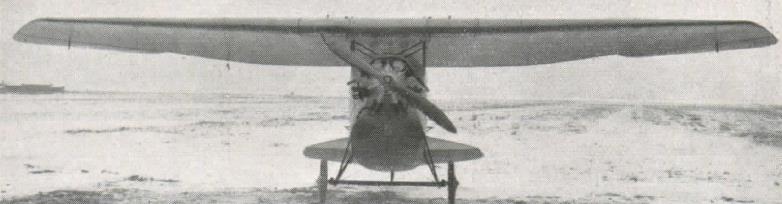
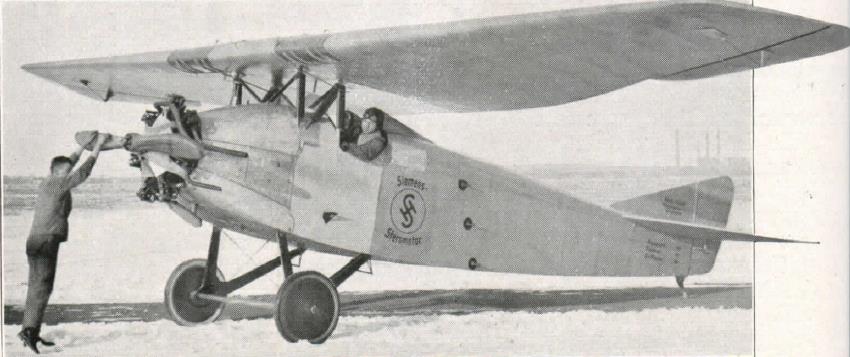
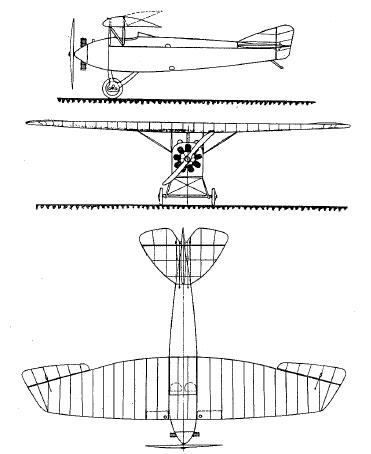
Tragdeck : freitragend, über dem Rumpf auf Stahlrohr-bock gelagert, wodurch Führer besonders bei Landung gute Sicht hat. Holzbau mit Stoffbespannung.
Rumpf: Holzfachwerk mit Drahtauskreuzung. Stoff-bespannung. Zwei Sitze nebeneinander, um leichteres Anweisen des Flugschülers zu gewährleisten.
Fahrgestell: Holzstrebenpaar in V-Form. Durch-laufende Radachse. In vorderer Absitzebene Drahtauskreuzung.
Leitwerk: unausgeglichene Ruder.
Triebwerk: luftgekühlter Siemens-Stern-Motor. Zwei Brennstofftanks im Tragdeck.
| Type |
Two seat trainer |
| Engine |
1 Siemens Sh 11 |
| Dimensions |
Length 8.10 m, height 2.80 m, span 12.00 , wing area 22 m2 |
| Weights |
Empty 570 kg, load 250 kg, flying weight 820 kg, wing loading 57,2 kg/m2, powerloading 10,2 kg/hp |
| Performance |
Max. speed 135 kn/h, service ceiling 3500 m, range 480 km, climb to 1000 m 9 min., start 100 m, landing 80 m |
| Type |
Werk.Nr |
Registration |
History |
|
36
|
D-1293 |
Used by the Focke-Wulf AG from Febr. 1928. Sold to DVL e. V., Adlershof in Febr. 1932. In Aug. 1933 taken over by the DLV e. v., Berlin |







