| Type |
Werk.Nr |
Registration |
History |
| Cox-Klemin CO-1 |
216 |
P-377 |
Built in 1924 (Officially built by Svenska Aero AB). Tested in November 1924 at Dayton by the US Army as Cox-Klemin CO-1. Not accepted and delivered back to Cox-Klemin |
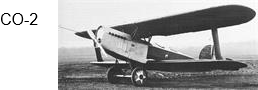
| Cox-Klemin CO-2 |
217 |
P-379, NC1189 |
Built in 1924 (Officially built by Svenska Aero AB). Tested in November 1924 at Dayton by the US Army as Cox-Klemin CO-2. Not accepted and delivered back to Cox-Klemin. Sold to General Airways Corp. as NC 1189 in Dec. 1926. In Oct. 1927 to Sky Signs of America . Damaged in the summer of 1929 at Wichita by a storm. Repaired after that. |
| HD 17 |
239 |
|
Built in 1926. Tested at Warnemünde in April 1926. Secretly transported to Lipezk and used as a light bomber and reconnaissance aeroplane |
| HD 17 |
240 |
|
Built in 1926. Secretly transported to Lipezk and used as a light bomber and reconnaissance aeroplane. Still in use 1929 |
| HD 17 |
241 |
|
Built in 1926. Secretly transported to Lipezk and used as a light bomber and reconnaissance aeroplane. Still in use 1929 |
| HD 17 |
242 |
|
Built in 1926. Secretly transported to Lipezk and used as a light bomber and reconnaissance aeroplane. Still in use 1929 |
| HD 17 |
243 |
|
Built in 1926. Secretly transported to Lipezk and used as a light bomber and reconnaissance aeroplane. Still in use 1929 |
| HD 17 |
244 |
|
Built in 1926. Secretly transported to Lipezk and used as a light bomber and reconnaissance aeroplane. Still in use 1929 |
| HD 17 |
245 |
|
Built in 1926. Secretly transported to Lipezk and used as a light bomber and reconnaissance aeroplane. Total loss in a landing 7/10 1927. |
| Type |
HD 17 Two seat light bomber and reconnaissance aircraft |
CO-1 Two seat reconnaissance aircraft |
CO-2 Two seat reconnaissance aircraft
|
| Engine |
1 Napier Lion |
1 Napier Lion |
1 Liberty L-12 |
| Dimensions |
Length 9,18 m, height 3,25 m, span upper wing 12,80 m, lower 11,40 m, wing area 40,6 m2 |
Length 9,30 m, height 3,25 m, span upper wing 12,90 m, lower 11,43 m, wing area 39,02 m2 |
|
| Weights |
Empty 1380 kg, flying weight 2200 kg |
Empty 1369 kg, flying weight 2148 kg |
|
| Performance |
Max. speed 220 km/h, landing speed 90 km/h, climb to 1000 m 3,5 min., to 3000 m 12,0 min., service ceiling 6500 m |
Max. speed 225 km/h, climb to 3000 m 11,0 min., service ceiling 6360 m |
|